Adding pavers to your outdoor area can be instantly transformative, offering a blend of functionality and aesthetic appeal. With a variety of stunning natural stone and porcelain pavers available, selecting the best option for your outdoor project requires some thoughtful consideration. This guide will help you navigate the process and ensure you choose pavers that perfectly complement your surroundings.
What to Consider When Choosing the Best Outdoor Pavers
The exterior of your home deserves as much attention as the interior when selecting the perfect floor covering. Here are key features to consider for choosing the ideal paver:
Heat Resistance
- Climate Considerations: If you live in a hotter climate or have limited shade outside, it's crucial to select pavers that can withstand high temperatures.
- Material Choices: Natural stone options like marble, limestone, and travertine are excellent at resisting heat. Alternatively, light-coloured porcelain tiles can be effective in reflecting heat and keeping surfaces cooler.
Slip Resistance
- Safety First: To prevent slips due to rain or pool splashes, choose pavers with good traction.
- Material Options: Porcelain pavers with textured, anti-slip surfaces (such as R10 and R11 ratings) are designed for this purpose. Travertine is another great option for natural stone that provides excellent slip resistance.
Durability
- Withstanding the Elements: The Australian climate can be harsh, so selecting durable pavers is essential. Both natural stone and porcelain are known for their resilience and can handle heavy foot traffic and various weather conditions.
Maintenance
- Maintenance Preferences: Some homeowners enjoy maintaining their outdoor spaces, while others prefer low-maintenance options. Granite and porcelain pavers are ideal for those seeking minimal upkeep.
Aesthetics
- Design and Style: Whether you have a specific design in mind or are open to inspiration, the visual appeal of pavers is a significant consideration. Exploring different options in a showroom can help you find the perfect match for your aesthetic preferences.
Common Outdoor Uses for Pavers
The placement and use of your new outdoor pavers are just as important as their features. Some homeowners prefer a uniform look throughout their outdoor space, while others enjoy mixing and matching different pavers for various areas. Here are some common uses for pavers:
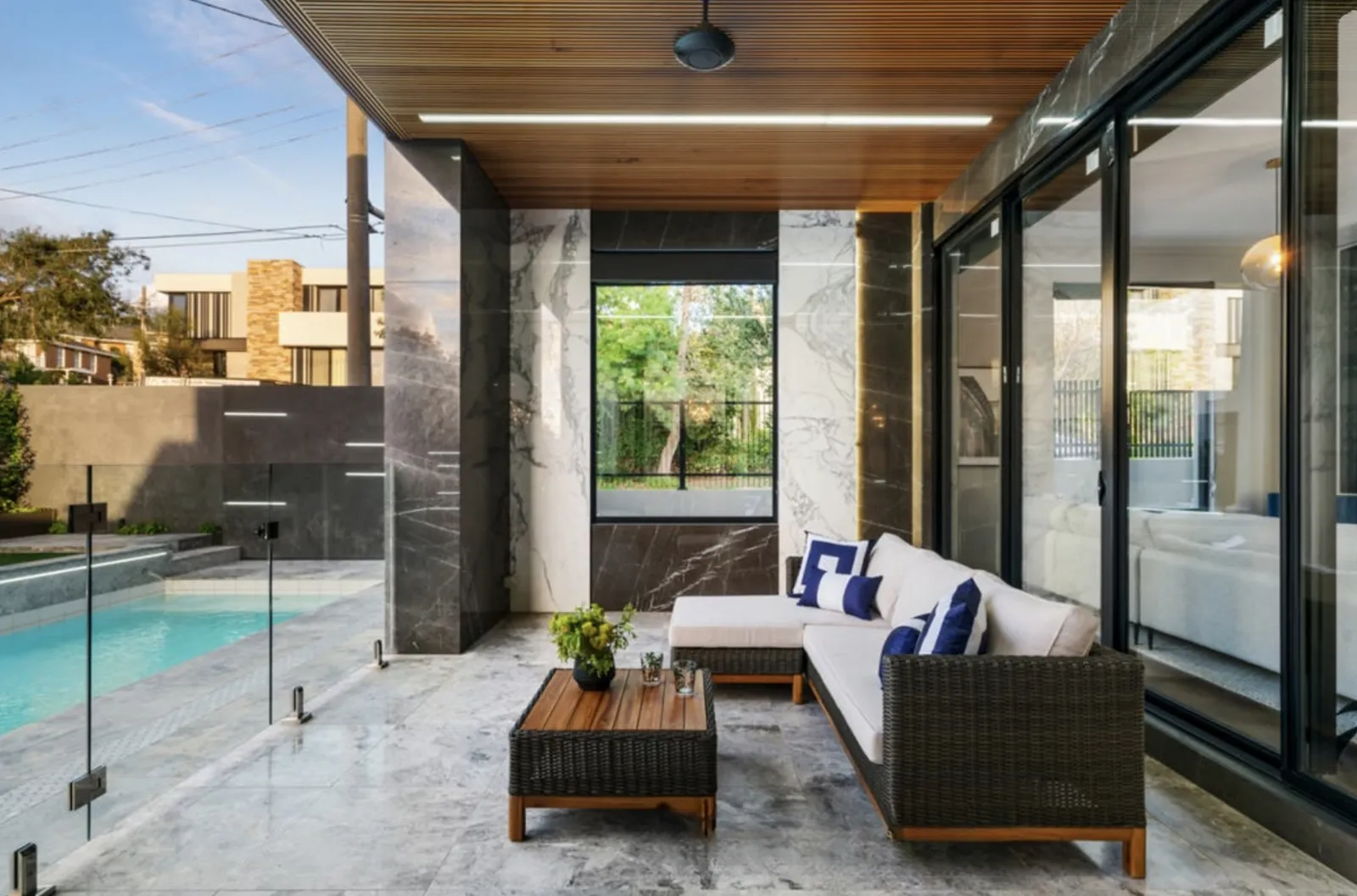
Pavers Around the Pool
- Non-Slip and Heat Resistant: Pavers are perfect for pool areas due to their non-slip qualities and heat resistance. This ensures safety and comfort during the summer months.
- Popular Choices: 20mm porcelain pavers are a popular choice for pool surrounds, offering heat resistance, non-slip traction, low maintenance, and ease of installation. Natural stone options like limestone and travertine are also excellent due to their grip surface, durability, and stylish appearance.
Pavers for Outdoor Patios
- Enhancing Outdoor Spaces: The right pavers can elevate your patio or outdoor entertaining area. Natural stone and porcelain pavers provide durability and a high-end look similar to indoor tiles.
- Top Picks: Marble and travertine pavers add a luxurious touch to any patio, making outdoor gatherings more enjoyable.
Walkways, Driveways, and Paths
- Practical and Attractive: Pavers are a practical and cost-effective way to create beautiful walkways and pathways around your home. They are also ideal for driveways, offering a sturdy and attractive entryway.
- Best Options: Granite and bluestone are recommended for high-traffic areas due to their resistance to wear. Porcelain is also durable and sometimes more budget-friendly.
Steps and Landings
- Adding Kerb Appeal: Pavers can be used to cover steps and landings, enhancing the overall appearance of your home. Choosing non-slip options ensures safety in all weather conditions.
- Seamless Transition: For a cohesive look, outdoor pavers can be matched with the flooring inside your home.
By considering these factors and exploring various options, you can choose the best pavers for your outdoor space, ensuring both functionality and aesthetic appeal.