
Ant Group’s Ant Ling team has released the weights of a large model built for medical reasoning and long, multi-step clinical-style workflows — and has been unusually direct about what it must not be used to do.
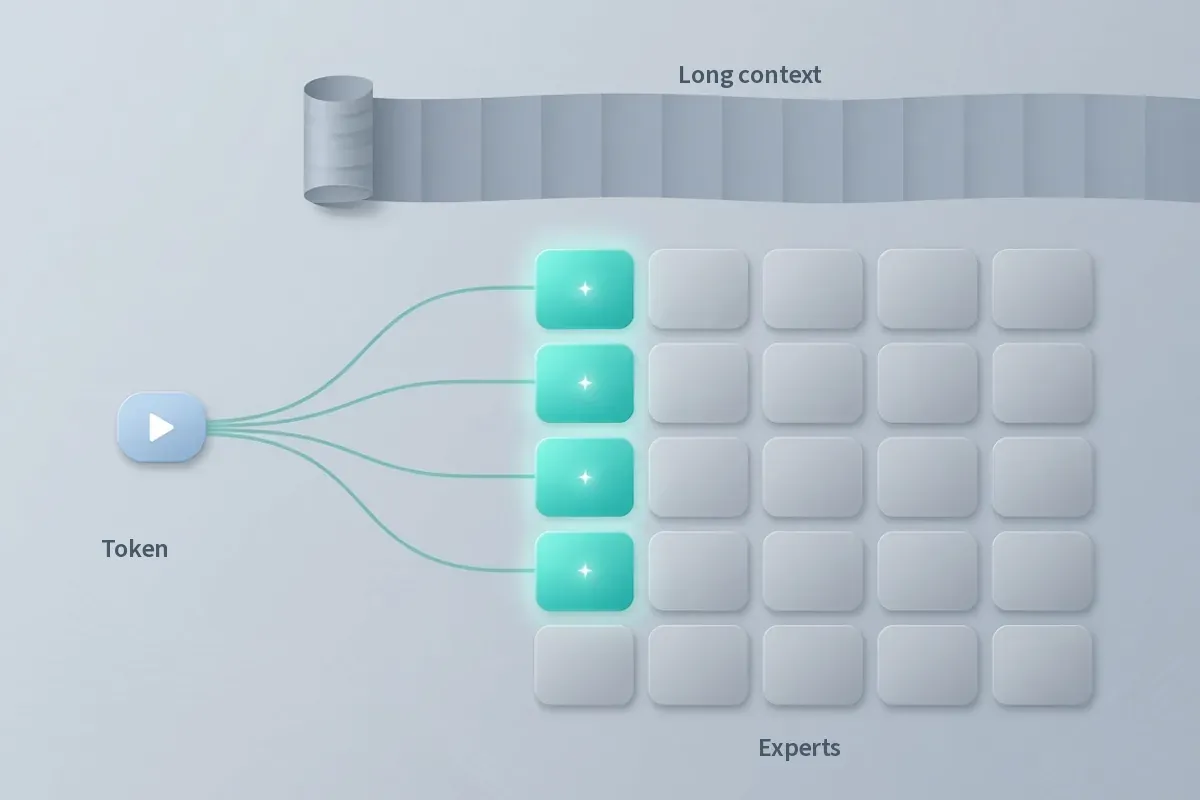
The model, LingSante-3.1-flash, is available on Hugging Face under the inclusionAI account. Official materials describe it as a hybrid-linear mixture-of-experts system with 560 billion parameters in total, of which 25 billion are activated for each token, and a context window of one million tokens. It is built on Ant Ling’s general Ling-3.1-flash model. A previous healthcare release, Ling-3.0-flash-Sante, was much smaller, with 124 billion total parameters and 5.1 billion active per token.
According to the model card, the system is trained to handle several jobs that sit close together in real medical work: complex reasoning, professional communication, evidence-based research, and long-horizon tasks that unfold over many steps. Ant Ling says real clinical-style problems often involve incomplete information, wide variation between patients, and strict rules about how work can be done. The training recipe it describes mixes general and medical data, then adds reinforcement learning and a distillation stage that tries to combine strengths from more than one teacher model.
The headline results are the company’s own claims and should be read that way. Ant Ling says LingSante-3.1-flash achieves state-of-the-art results among open-source models on complex medical reasoning tasks, and ranks second overall on medical professional-behaviour benchmarks, behind GPT-6 Astra. The public model card and accompanying blog post do not, in the material reviewed for this article, set out a full independent leaderboard that would allow a reader to check those rankings without relying on the developer. Benchmark scores, as the model card itself notes, also do not establish clinical effectiveness. Performance may vary by specialty, language, population and local conditions.
Just as important as the claims is the intended-use line, which is written in plain language. The Hugging Face card states that LingSante-3.1-flash is intended for research and evaluation, “is not a medical device and must not be used as an independent basis for diagnosis, prescriptions, or treatment.” The company’s blog post makes the same point and adds that a substantial gap remains between strong offline benchmark results and real clinical deployment. It says the system still has room to improve on complex workflows, long interactions and local context, and that privacy, compliance and professional review would need further validation in any real deployment. Model outputs, it says, should never replace the judgement of a licensed physician.
The card lists uses that stay on the research side of that line: literature analysis and evidence synthesis, medical question answering and document review with qualified human oversight, structured extraction, retrieval-augmented applications, and work on tool-using agents. It also sets out limits. Outputs may be wrong, incomplete, out of date or poorly supported by the evidence they cite. A long context window does not mean that every relevant fact in a record will be found. Personal health information must be protected, and consequential actions should have human approval.
For teams that do want to try the model in a lab setting, Ant Ling documents inference recipes for SGLang and vLLM, including multi-GPU server setups. Those instructions are for technical evaluation. They are not a green light for clinical use.
In short, this is a large, openly released specialist model with ambitious claims and an equally clear warning label. The open weights make it easier for researchers to probe what a medical-reasoning system can and cannot do. They do not turn it into a diagnostic tool.
Why it matters for Australia
In Australia, software that is used to diagnose, treat or make clinical decisions about patients is generally subject to Therapeutic Goods Administration rules for medical devices. That is one reason the developer’s own warning matters here. LingSante-3.1-flash is being offered as a research model, not as a device, and the publishers say it must not be used as a basis for diagnosis, prescribing or treatment. Australian clinicians, hospitals and health start-ups who experiment with it should treat those limits as a starting point, keep a qualified person in the loop, and not assume that a strong benchmark result is the same thing as a tool that is safe to use with patients.