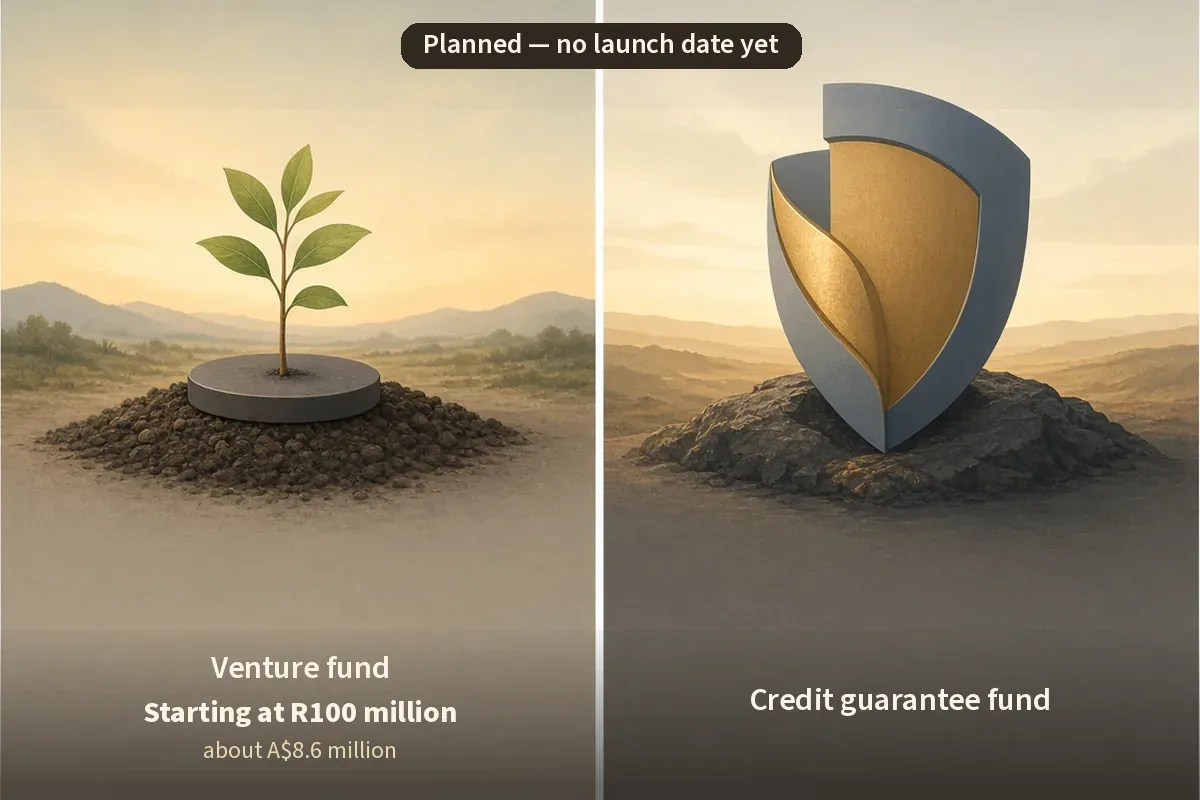
South Africa plans to set up a venture capital fund that will “start off with R100 million,” plus a credit-backing fund, to back start-ups in artificial intelligence and the wider technology sector, President Cyril Ramaphosa said at the end of a working visit to Silicon Valley.
The figure is about A$8.6 million at mid-market rates on 23 November 2026. Exchange rates move, and the amount is a starting point rather than a final fund size. Official government news service SAnews reported the remarks on 22 November 2026; The Citizen carried a similar account the same day.
According to SAnews, Ramaphosa said the idea emerged from commitments made by South African entrepreneurs on the trip, and that the government would seek to match those commitments and invite the private sector to take part. The Citizen quoted him saying the government “will establish a fund drawing in public and private capital to support high-tech start-ups working on AI in South Africa.” The official report also mentions a credit-backing fund to help start-ups in AI and tech. Neither report named a fund manager, set out who would be eligible, or gave a launch date. On the public record so far, this is a planned initiative, not a scheme that is already open to applicants.
The announcement closed a five-day working visit, SAnews said, by a delegation of almost 300 people, including business leaders, ministers, officials, students, public entities and research institutions. Ramaphosa described the trip as a chance to understand how South Africa could use emerging technology for growth, jobs and better public services, and said the country should not be left behind. He also warned that AI carried risks, including job losses and cybersecurity threats, and stressed reskilling and the need to look after vulnerable groups.
One claim in his investment pitch should be treated as a statement by the president, not as a figure independently checked for this article. He said South Africa already hosts more than 70% of Africa’s data centres, a figure reported by both SAnews and The Citizen. He argued that this existing footprint could be expanded to meet demand for computing capacity driven by AI, and that the country could in time export that capacity. The Citizen also reported that he held discussions with large technology firms, including Alphabet and Microsoft, about further investment.
The visit is meant to feed a written plan, not only a press conference. SAnews said a dedicated team would coordinate an action plan, with the president expecting implementable ideas and proposals within 90 days. The Citizen reported a post from the Presidency saying a National Artificial Intelligence Action Plan would be developed within 90 days, organised around four priorities: using AI to improve public services; attracting investment in infrastructure; building local capability and access; and preparing for risks through cybersecurity, skills and inclusive adoption.
The Citizen also noted criticism that the delegation had not secured meetings with some of the best-known industry leaders, including OpenAI chief executive Sam Altman, and that the heads of Microsoft and Alphabet were not on the schedule. Ramaphosa, the paper said, still described the visit as a success in positioning South Africa in the AI economy.
For start-ups, the cautious reading is the fair one. R100 million is a modest sum by the standards of global AI investment, even as a first instalment, and credit backing can matter as much as equity if it is designed well. Until a manager, rules and a timetable are published, the announcement is best understood as a political commitment made after the Silicon Valley visit, with a 90-day window in which the government says it wants practical next steps.
Why it matters for Australia
The direct effect in Australia is limited: this is a planned South African fund for South African start-ups. Two points are still worth noting. First, the starting amount is small in Australian-dollar terms — about A$8.6 million — which helps keep the scale in perspective. Second, Ramaphosa’s pitch leans on data-centre capacity and a wish to attract global technology investment. Australian firms that operate in Africa, or compete for the same infrastructure and capital, may want to watch whether the fund and the 90-day action plan turn into something with a manager, rules and a date, or remain a statement of intent.