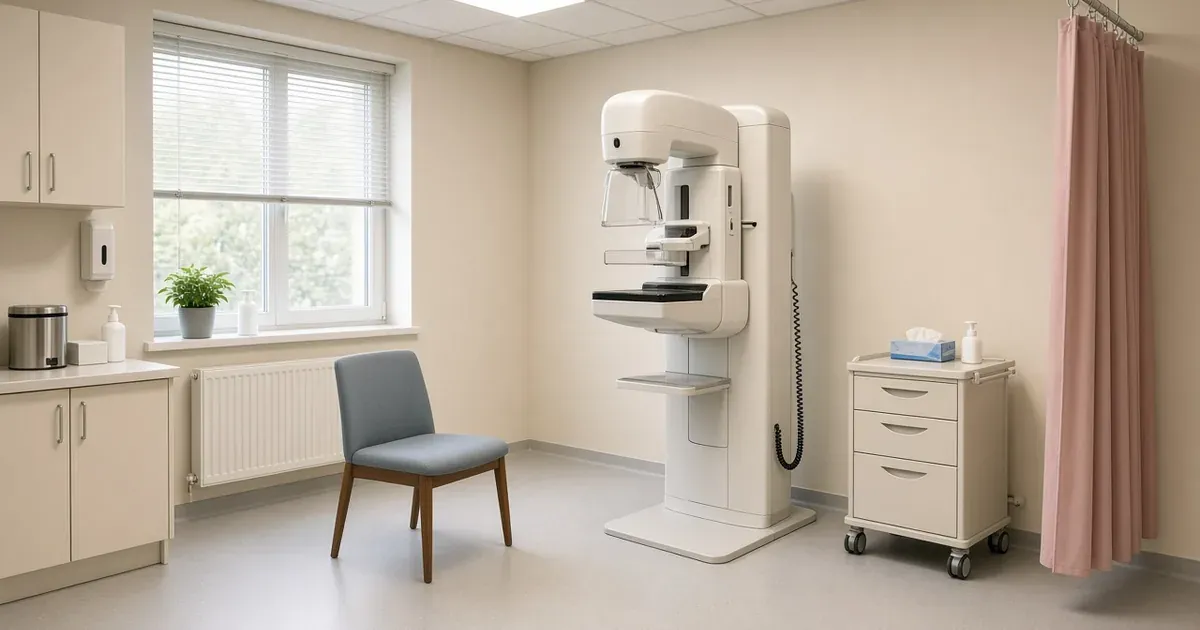
The NHS has begun recruiting for what it and the BBC describe as the world’s largest trial of AI-assisted breast screening. Nearly 700,000 women attending routine mammograms in the United Kingdom over the next three years are expected to take part.
The study, known as EDITH, has started at Cambridge University Hospitals, the first of 30 sites across the UK. Further centres are due to open in the coming months. It is led by the University of Warwick, the University of Cambridge and Cambridge University Hospitals NHS Foundation Trust, working with NHS England.
NHS England says the trial is funded with £10 million from the National Institute for Health and Care Research (NIHR). The BBC reported the cost as £11 million. Both name NIHR as the funder.
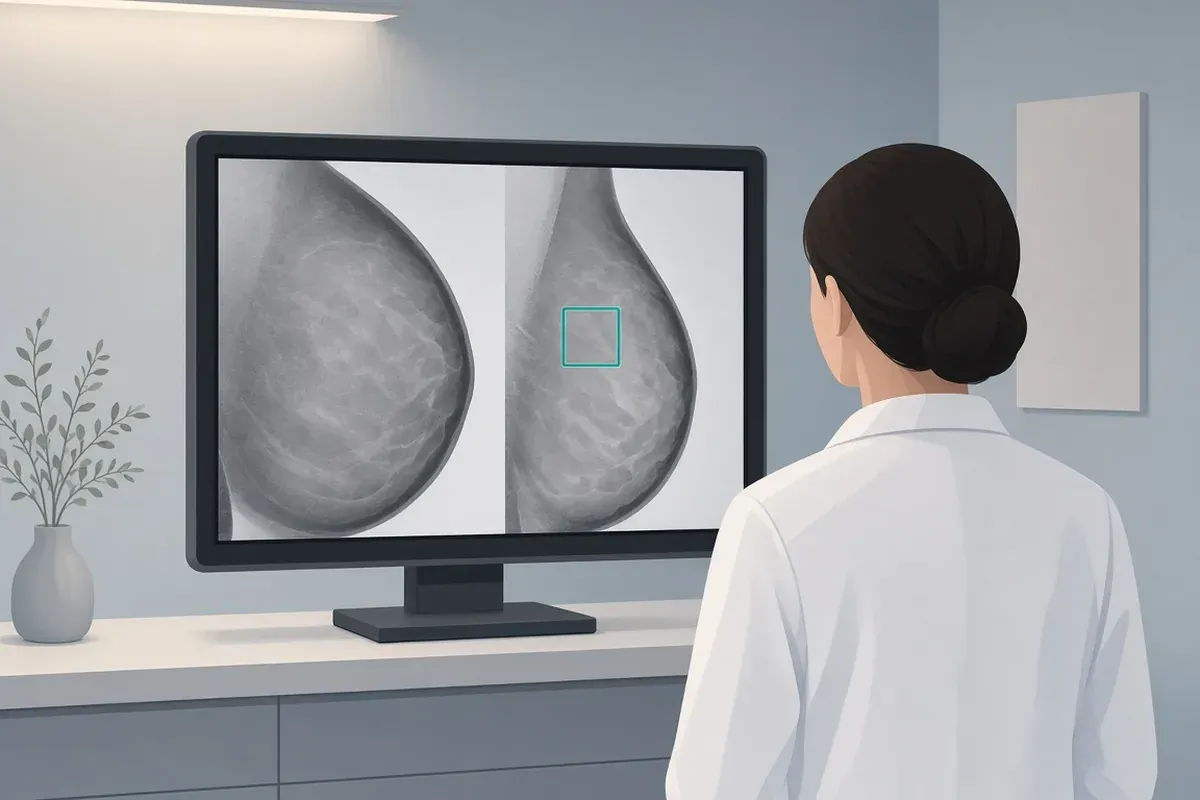
The question the trial is trying to answer is practical as well as clinical. Today, two specialists review each mammogram. The study will test whether an AI tool can assist so that most images need only one human reader, which NHS England says could free specialists for other cancer tests and treatment. The appointment itself will not change. Women aged 50 to 71 will be invited for screening as usual, every three years. Letters will explain the trial and include an option to opt out.
Importantly, a human specialist will still see every scan. Professor Peter Johnson, NHS England’s national clinical director for cancer, said every scan would still be reviewed by a specialist, and urged women who are invited to take part. Professor Sian Taylor-Phillips, an NIHR research professor at the University of Warwick and a co-chief investigator, said all clinical decisions during the trial would remain with NHS staff. She also said the team had “rigorously tested 4 AI systems for accuracy” and would use them “safely and transparently”. The BBC reported that four AI companies are involved, and that in one arm of the trial an AI program will grade images before they go to NHS experts, while in another it will review them afterwards.
Researchers are not only asking whether AI can help find cancers earlier. They also want to know whether better detection comes with a cost: more women called back for tests they did not need. Taylor-Phillips told the BBC the team wanted to avoid “the overdiagnosis of milder disease that would never have caused symptoms.”
The scale of screening helps explain why a large trial is being run. NHS England says women in the invited age group account for around 2.1 million screenings a year, and that the programme helps prevent around 1,300 deaths. It describes breast cancer as the most common cancer in women, with around 55,000 diagnosed every year. The BBC, writing about the UK as a whole, put the annual figure at around 59,000 and said more than two million people attend screening each year. Both say about a third of cases are picked up through screening, usually at an early stage. Professor Fiona Gilbert, of the University of Cambridge and Cambridge University Hospitals, and also a co-chief investigator, said millions of women have a mammogram each year and that fewer than 1% will have cancer.
Health and Social Care Secretary Yvette Cooper, visiting the team at Addenbrooke’s Hospital, called it the biggest AI breast cancer trial in the world and said AI needed “proper safeguards”. Professor Lucy Chappell, chief executive of the NIHR, said the study would test whether the technology could change how cancer is detected, while keeping “the safety, quality and human expertise at the heart of NHS care”.
The NHS also pointed to Shirley Essex, 70, from Cambridgeshire, who is not in the trial. She was diagnosed with early-stage breast cancer in October 2025 after a routine mammogram, having had no symptoms. After surgery and radiotherapy, NHS England said she is now doing well. She told the BBC the mammogram had saved her life.
The trial is expected to run for about three years. It is a test, not a decision to change standard NHS screening. If it works, officials say it could ease pressure on radiologists. If it does not, the two-reader approach will have been checked against a large set of real screening data.
Why it matters for Australia
Australia already runs a national screening program, BreastScreen Australia, which invites women aged 50 to 74 for a free mammogram every two years. The UK trial is not an Australian study, and it does not change advice for women here. What it will produce, if completed as planned, is a large set of evidence about using AI as an aid in organised screening while keeping a specialist in the loop and watching for unnecessary recalls. Those are questions any screening program, including Australia’s, would need to weigh before changing how mammograms are read.