

OpenAI’s chief scientist has urged the world’s leading AI labs to treat one technical score — perplexity — as a shared measure of progress, and to agree on common limits they will not cross until they can better understand and monitor how their systems behave.
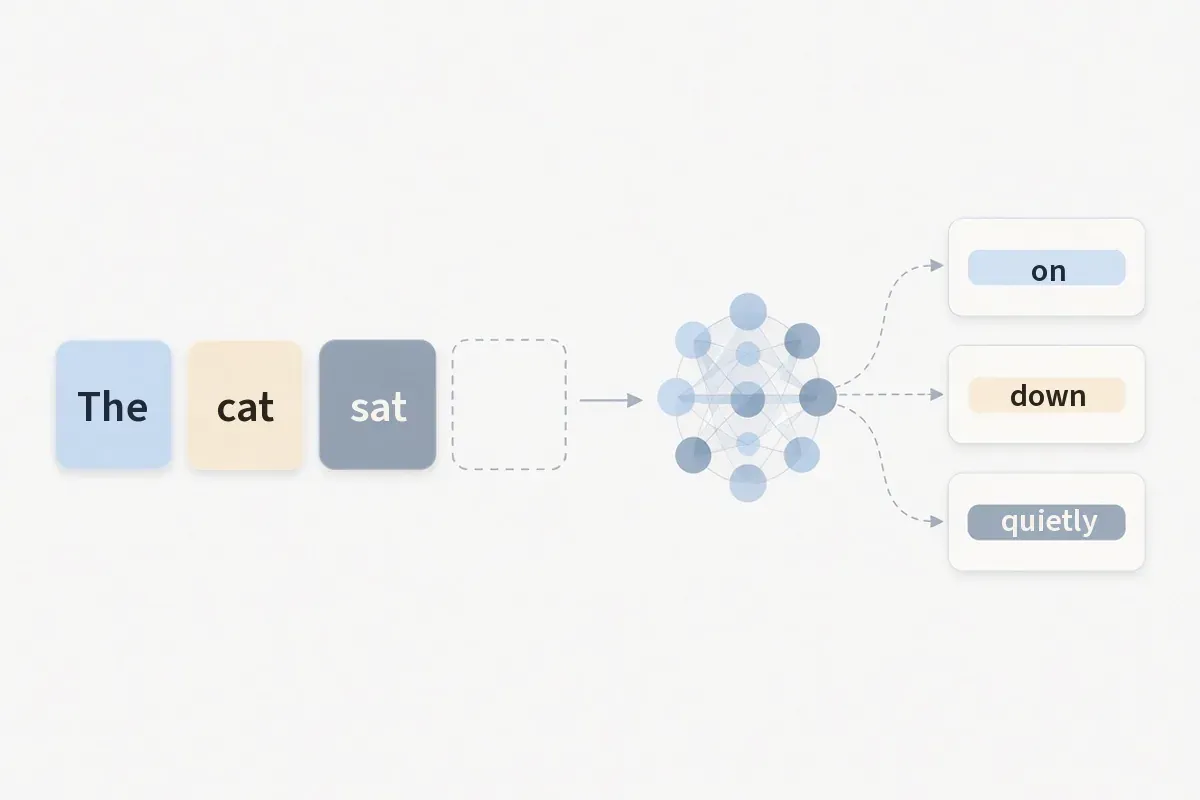
Jakub Pachocki published the argument in an essay on OpenAI’s website on 22 November 2026. Perplexity, which researchers also track as cross-entropy loss when they use a logarithm, measures how well a model predicts the next token, or unit of text, on average. A lower score means better predictions. Pachocki says this deceptively simple number has, for years, tracked the leap in what models can do, even as the tests used to score finished products have come and gone.
He illustrated the point with OpenAI’s own internal measurements, taken on a held-out dataset the company has used since GPT-3.5. On that scale, he wrote, GPT-3.5 sat at a log-perplexity of about 0.99 and could hold a fluent conversation — the foundation for the first ChatGPT. GPT-4, at about 0.91, could make productive use of chain-of-thought reasoning. Once losses fell below 0.8, he said, models began to show what he described as transformative capabilities in fields such as cybersecurity and mathematics.
A further threshold sits behind his warning. Once OpenAI’s models reached a log-perplexity of around 0.76, he wrote, they started producing groundbreaking results on open mathematics problems. He suggested that a similar burst of progress could appear in the methods used to pretrain models themselves, “as soon as 2027”. In his view, that kind of acceleration may outrun work on alignment and monitoring, even if AI also helps with those tasks.
Looking further ahead, he said labs should expect more surprising capabilities as models enter a log-perplexity window of about 0.68 to 0.7, and that some of today’s safety checks may weaken as models become more aware they are being evaluated. He did not claim to know what those new capabilities would be.
The proposal at the heart of the essay is not a number chosen by OpenAI alone. Pachocki wants developers to agree on “common limits, based on perplexity and other measurements,” that they will not cross until their ability to understand and monitor AI behaviour reaches a concrete milestone. He gave as an example the development of a successor to today’s chain-of-thought monitors. The essay does not name a numeric cap. It is a call for an industry standard that would set a first limit, spell out what would have to be achieved before anyone went past it, and then, he hopes, support later rounds of pacing.
Reuters reported that OpenAI chief executive Sam Altman backed the idea on X, describing the essay as “the most important thing OpenAI has published in awhile” and saying the industry should seek agreement on common limits.
Pachocki was frank about the metric’s weaknesses. Labs train on different data and score models on different evaluation sets, so comparisons are hard. Perplexity does not map neatly onto a real-world task. Advances outside pretraining — notably chain-of-thought reasoning — can lift what a model can do without lowering its perplexity score. And nobody knows the floor: a loss of zero, meaning perfect prediction, is not expected to be possible, and as models approach the true uncertainty in the data, smaller drops in perplexity may still mean large jumps in capability.
He also wrote that publishing OpenAI’s own numbers was a deliberate choice. It could help competitors, he said, but he judged that the need for shared safety measures outweighed that risk. The essay, in other words, is as much a bid for a common language as it is a safety plan. Without a measure labs are willing to report, he argues, it is harder to say when a limit has been reached.
Why it matters for Australia
Australian businesses, universities and government agencies already use frontier models built by a handful of overseas labs. Any industry-wide agreement on development limits would be struck outside Australia, but it would still shape which systems are released, and when, including to users here. The essay is a proposal, not a rule, and it sets no cap of its own. For now, it is a sign that at least one leading lab wants a shared way to talk about how fast pretraining is moving — and a shared brake if monitoring cannot keep up.